Funding · Francophone schools
Vice-Versa: a micro-grant for a project built with students
Administered by the Fédération de la jeunesse canadienne-française (FJCF), Vice-Versa supports projects carried out in partnership between francophone community organizations and francophone schools in minority settings. Students take an active part in thinking up, choosing and carrying out the project.
- Amount
- $1,500 per school per project
- Limit
- One micro-grant per school per school year
- Schools
- Eligible schools in the Vice-Versa directory, K-12
- 2026-2027
- Projects held between Aug 25, 2026 and June 30, 2027
Who applies?
The application must be submitted by a duly incorporated Canadian non-profit organization, which must partner with one or more eligible schools before applying. When the same project takes place in several eligible schools, amounts can add up, and remoteness bonuses may apply in some regions.
Profaqua can contribute to French-language science projects in which students get involved in the project itself rather than simply attending a one-time activity: for example, reflecting on a science theme, choosing an activity or approach, then taking part in carrying it out with Profaqua.
Projects whose theme is mainly arts, culture or heritage should be submitted to PassepART instead.

Three types of projects
Single project
A project carried out with one school on a given date.
Tour project
The same project carried out in several schools on different dates, within one province or territory.
Gathering project
A project held once to bring together students from several schools in the same region.
Science projects students can shape
Three examples of how students can think up, choose and carry out a project with Profaqua.
The bridge challenge
Students choose the type of structure to test, set the rules of the challenge and build their bridge over several visits. Classroom projects.
Our school against waste
Students pick a waste problem in their school, explore it with vermicomposting or the 4 Rs, then present their solution to the other classes.
A robotics mission
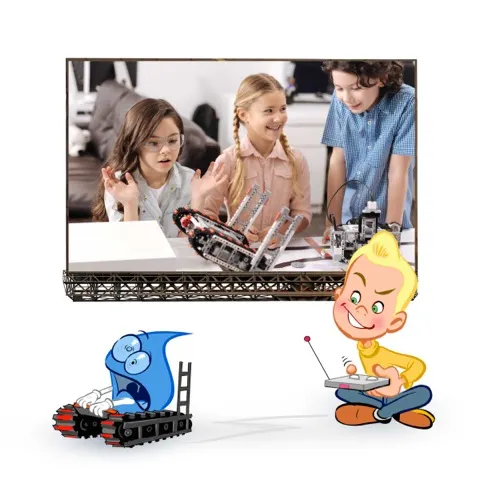
Students invent a mission for their robot, program it with LEGO® SPIKE™ and show it to families at a final gathering. Robotics.
Projects to build on
Multi-visit projects give students time to choose, test and present.


Step by step
How funding works with Profaqua
-
Imagine the project
The school and the partner organization discuss a project that meets Vice-Versa’s goals and involves students in its design.
-
Contact Profaqua
We discuss how a science activity could fit into your project.
-
The partner applies
The non-profit partner submits the request online, with the school.
-
Carry out the project
Once approved, the organization receives the micro-grant and the project takes place with the students.
Key points
- $1,500 per school per project.
- One micro-grant per school per school year.
- Eligible schools from kindergarten to grade 12.
- Project carried out in French.
- Application submitted by an eligible Canadian non-profit, in partnership with a school.
- Students must take part in thinking up, choosing and carrying out the project.
- Single projects, tours or gatherings are possible.
- Remoteness bonuses may be available.
- Projects mainly about arts, culture or heritage belong with PassepART.
Other funding options
For francophone schools
PassepART
For an activity with an artistic, cultural or heritage dimension, applied for by an eligible non-profit.
Learn moreYour APÉ
It can fund part of a project or act as the partner organization, depending on the program.
Learn moreFunding your activity
Pick your school’s program and see every option that may apply.
Learn moreProgram details can change. Visit Vice-Versa for current criteria and the list of eligible schools.
Google reviews
What people say about Profaqua
4.4out of 57 Google reviews
Reviews written in French.
Une équipe dynamite! Ce sont des fous de la science. Mes enfants se rappellent encore des ateliers donnés dans leur classe au primaire. "Ah oui, c'était super cool avec Profaqua!" ;) Et maintenant ils offrent un camps d'été, mais mes enfants n'ont plus l'âge. Snif. Salut à toute l'équipe Profaqua!
J'ai assisté à une démonstration sur la chimie et ce fut excellent, j accompagnais un groupe de jeunes et ils ont gardé leur concentration tout le long. Ils ont adoré et ce fut instructif, Éric en plus d'être drôle , connaît très bien sa ma matière .
A quote for your request: Vice-Versa
Profaqua sends you a detailed quote and a description of the activity, ready to attach to your funding request.
No booking, payment or commitment is required before you approve the proposal.
Can Profaqua be the partner organization?
No. Profaqua is an incorporated company. The application comes from a Canadian non-profit, such as a community organization or an eligible APÉ, with Profaqua as the provider of the science activity.
Is a one-time workshop enough?
Vice-Versa asks that students take part in thinking up, choosing and carrying out the project. A multi-visit project where students make real choices fits better than a single workshop.
Can several schools share a project?
Yes. A tour project runs in several schools on different dates, and a gathering project brings students from several schools together once. When the same project runs in several eligible schools, the amounts can add up.
When must the project take place?
For 2026-2027, funded projects must take place between August 25, 2026 and June 30, 2027.
Is the activity entirely in French?
Yes. Every Profaqua activity is led in French. For French Immersion and Core French classes, the facilitator adapts the pace and vocabulary and relies on demonstration.
How much can Vice-Versa pay?
$1,500 per school per project, with one microgrant per school per school year. When the same project runs in several eligible schools, the amounts can be combined, and remoteness bonuses may apply in some regions.
Can an arts or heritage project use Vice-Versa?
No. Projects whose theme is mainly arts, culture or heritage go to PassepART instead. Vice-Versa funds other French-language projects in which students help think up, choose and carry out the project.
No question matches. Try another word or write to us!