Outdoor science workshops: turning the schoolyard into a lab
Sometimes the best lab is just outside the door. In the schoolyard, a park or a natural area near the school, students observe living things where they actually live. Here is how Profaqua’s outdoor workshops work and how to plan one.

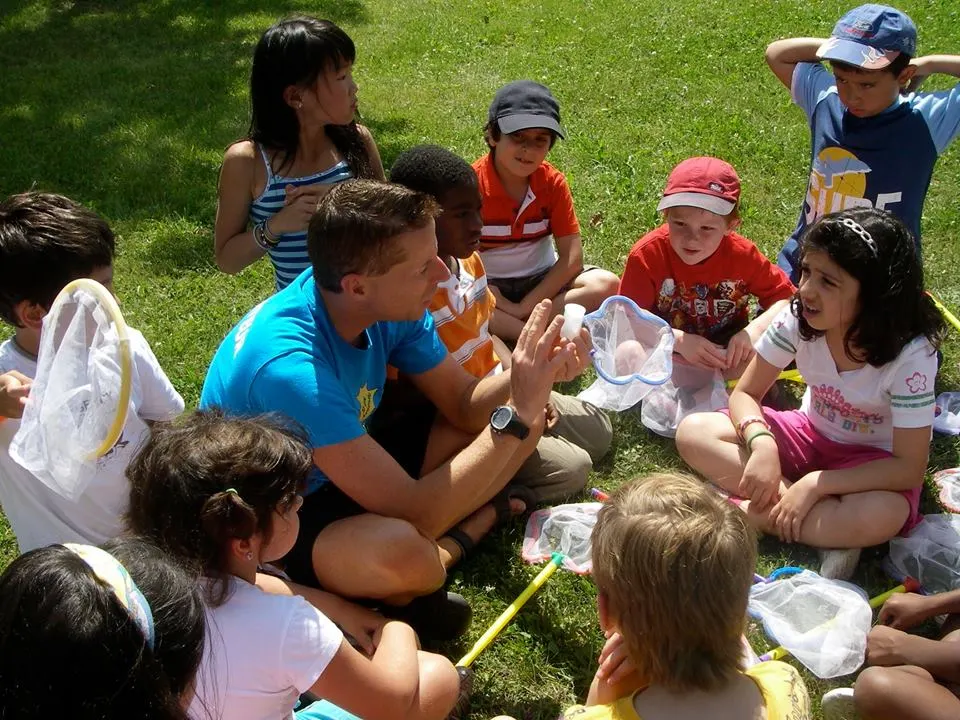
Why take science outside
Outdoor learning is known for its many benefits: it supports concentration, stimulates creativity, encourages physical activity and strengthens students’ well-being. It also builds respect for the environment while giving real meaning to what students learn in class.
For science, the outdoors adds something no classroom can: the real thing. A tree that tells its age, insects under a log, birds that answer a call, leaves that have vanished since winter. Students do not look at a picture of a phenomenon; they find it.
Six topics to explore outside
Trees
Students work out the age of trees by counting growth rings, handle balsam fir cones and test what happens to sap when bark is injured. From grade 3 to grade 7. See the workshop.
Flowers
Students dissect a real flower to discover how it reproduces, and learn that the Indigenous peoples of what is now Canada used more than 1,000 different plants. From kindergarten to grade 8. See the workshop.
Insects
Anatomy of insects and arachnids, a beautiful collection to handle, and the story of a sacred herb used against mosquitoes. From kindergarten to grade 4. See the workshop.
Birds in Nature
A two-hour outing with an experienced naturalist, binoculars and observation sheets, and the legend of the Thunderbird of the Northwest Coast. From grade 3 to grade 6. See the workshop.
Spring Plants in Nature
A two-hour walk to observe British Columbia spring plants such as bloodroot and the red trillium. From grade 3 to grade 7. See the workshop.
Life Underground
Where did the leaves buried under the snow go? Students become detectives, then observe the culprits up close: mites, springtails and earthworms. From kindergarten to grade 8. See the workshop.
When and where
To make the most of outdoor conditions, outdoor workshops are offered in September, October, May and June. They take place in the schoolyard, a park or a natural area near the school, so there is no bus to book.
And if the weather turns? The activity is adapted and run inside the school. The fun of learning does not depend on the forecast.
Fall or spring?
Both seasons work, and each has its own discoveries.
- September and October: trees, fallen leaves and the life underground that breaks them down, a good start to a unit on ecosystems.
- May and June: spring plants, flowers, insects and birds that come back with the warm weather.
Visiting the same place in the fall and again in the spring lets students compare what changed, and why.
What to plan
- Clothing for the weather and closed shoes for every student.
- A spot in the schoolyard or nearby park, and the route to get there.
- A room inside the school in case of rain.
- If possible, a few adults to accompany the group on the two-hour nature outings.
Tell us where you would like the activity to happen when you book, and we confirm the details together.
Comfort and safety outdoors
A good outdoor workshop starts with comfortable students. Check the forecast the day before and remind families about clothing, hats in June and a water bottle. Closed shoes are a must on uneven ground.
Tell us when you book about any allergy in the group, especially to insect stings or plants, and about any student who needs extra support to move outside. The facilitator adapts the route and the activity, and the school’s usual safety rules apply throughout.
Finally, agree on a meeting point and a signal to gather the group. Outside, the same signal used in class works best: students already know it.
Prices and funding
Outdoor workshops start at $205 for 60 minutes and $256 for 75 minutes, based on a minimum of two classes per day. The two-hour nature outings, Birds in Nature and Spring Plants in Nature, start at $410. GST and PST are extra. See all prices.
Several outdoor workshops connect science with the land and Indigenous knowledge. In francophone schools, that dimension can make them a good fit for a PassepART project, depending on its criteria. French Immersion and Core French schools can look at Canadian Parents for French.
Back in class
Bring the outdoors back inside: a map of the schoolyard with what students found, a class herbarium, a bird list that grows through the season, or a before-and-after comparison between fall and spring. The same spot visited twice in the year tells a story students remember.
What happens if it rains?
The activity is adapted and run inside the school.
Do we need a forest near the school?
No. The schoolyard or a nearby park is enough for most workshops. The two-hour nature outings use natural areas close to the school.
Are outdoor workshops in French?
Yes, entirely, like every Profaqua activity.
No question matches. Try another word or write to us!

Éric Tremblay · Founder of Profaqua
Éric founded Profaqua in 2000. Over 25 years, he has designed more than 55 science workshops in biology, chemistry, physics, Earth and space science, the environment and robotics. Based in British Columbia since 2021, he travels the province every year to bring hands-on science in French to students in francophone and French Immersion schools.
The Profaqua story

